

This leaves us with the ultimate question, one that feels more urgent with each passing day: Can AI truly save the future?

From the subtle recommendations that shape our playlists to the complex algorithms that influence financial markets, Artificial Intelligence is no longer a far-off concept; it’s a fundamental part of our daily lives. The global conversation around AI oscillates between utopian promise and dystopian fear. We are told it will cure diseases and solve climate change, yet we worry it will take our jobs and erode our freedoms.
This leaves us with the ultimate question, one that feels more urgent with each passing day: Can AI truly save the future?
The Grand Promise: AI as Our Global Problem-Solver
The argument for AI as a savior is compelling and rooted in its almost incomprehensible power to process complexity. Consider the greatest challenges humanity faces:
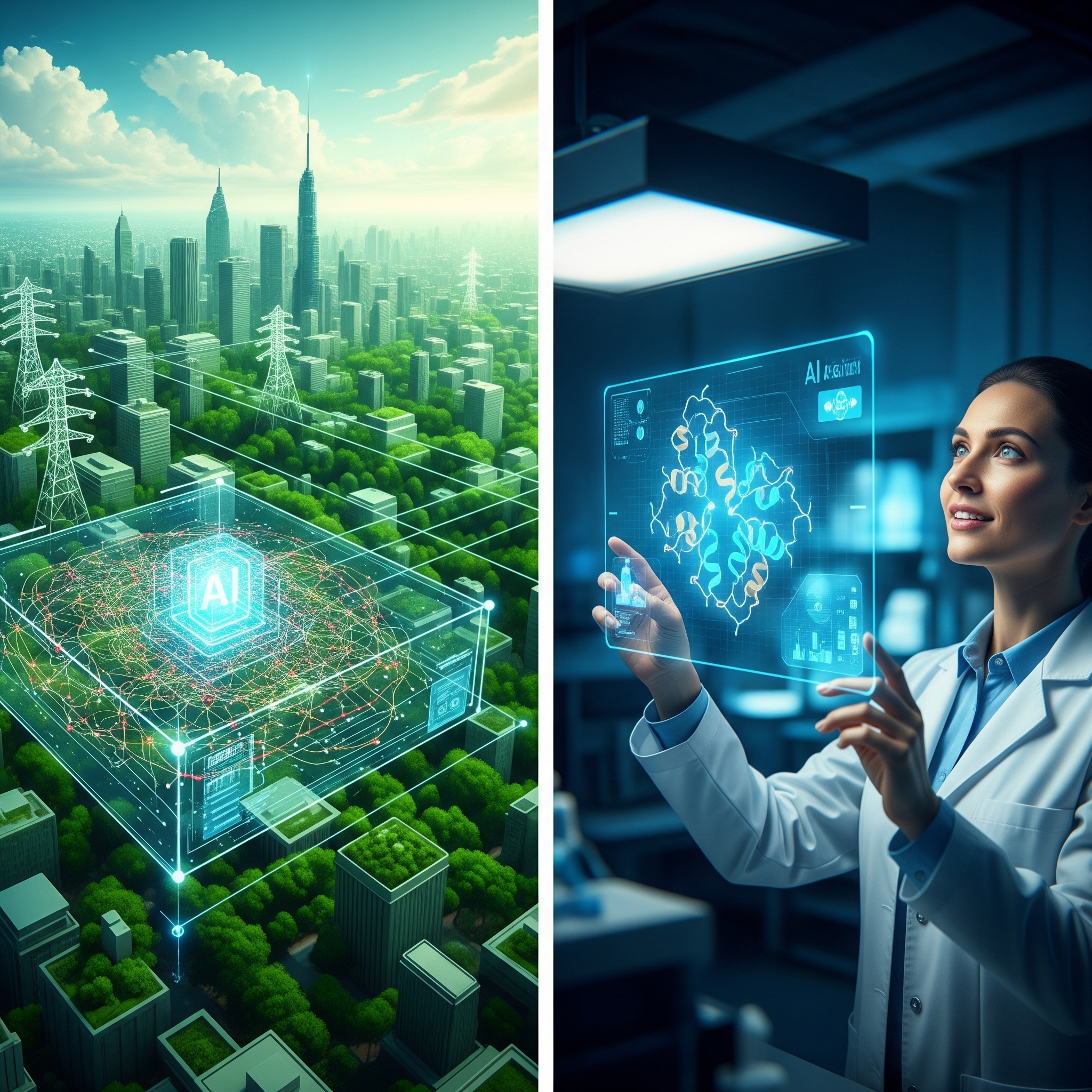
Climate Change: While we struggle with policy and international agreements, AI is already at work. It’s optimizing energy grids to reduce waste by the second, modeling climate patterns with terrifying accuracy, and accelerating the discovery of new materials capable of capturing carbon directly from the air. AI can manage the intricate dance of variables required for a sustainable planet in ways the human mind simply cannot.
Human Health: The era of one-size-fits-all medicine is ending. AI is speeding up drug discovery from decades to mere months. It’s personalizing cancer treatments based on an individual’s genetic code and providing early, accurate diagnostics in remote communities via a simple retinal scan. This isn’t just improvement; it’s a revolution in how we care for one another.
Global Systems: From untangling complex supply chains to prevent famine to allocating resources after a natural disaster, AI offers a new frontier in logistical efficiency, promising to do more good, for more people, faster than ever before.
The Inherent Peril: A Tool That Can Break Us
However, to embrace AI’s potential without acknowledging its peril is profoundly naive. A tool this powerful is a double-edged sword, and the risks are as monumental as the rewards.
Amplified Bias: An AI is only as good as the data it’s trained on. If we feed it a history of human bias, it will not only replicate but amplify our worst prejudices in hiring, policing, and loan applications, creating a world of automated, systemic inequality.
Economic Disruption: The displacement of jobs is not a possibility but a certainty. While new roles will be created, the transition threatens to deepen the chasm between the adaptable and the left-behind, posing a fundamental challenge to our social fabric.
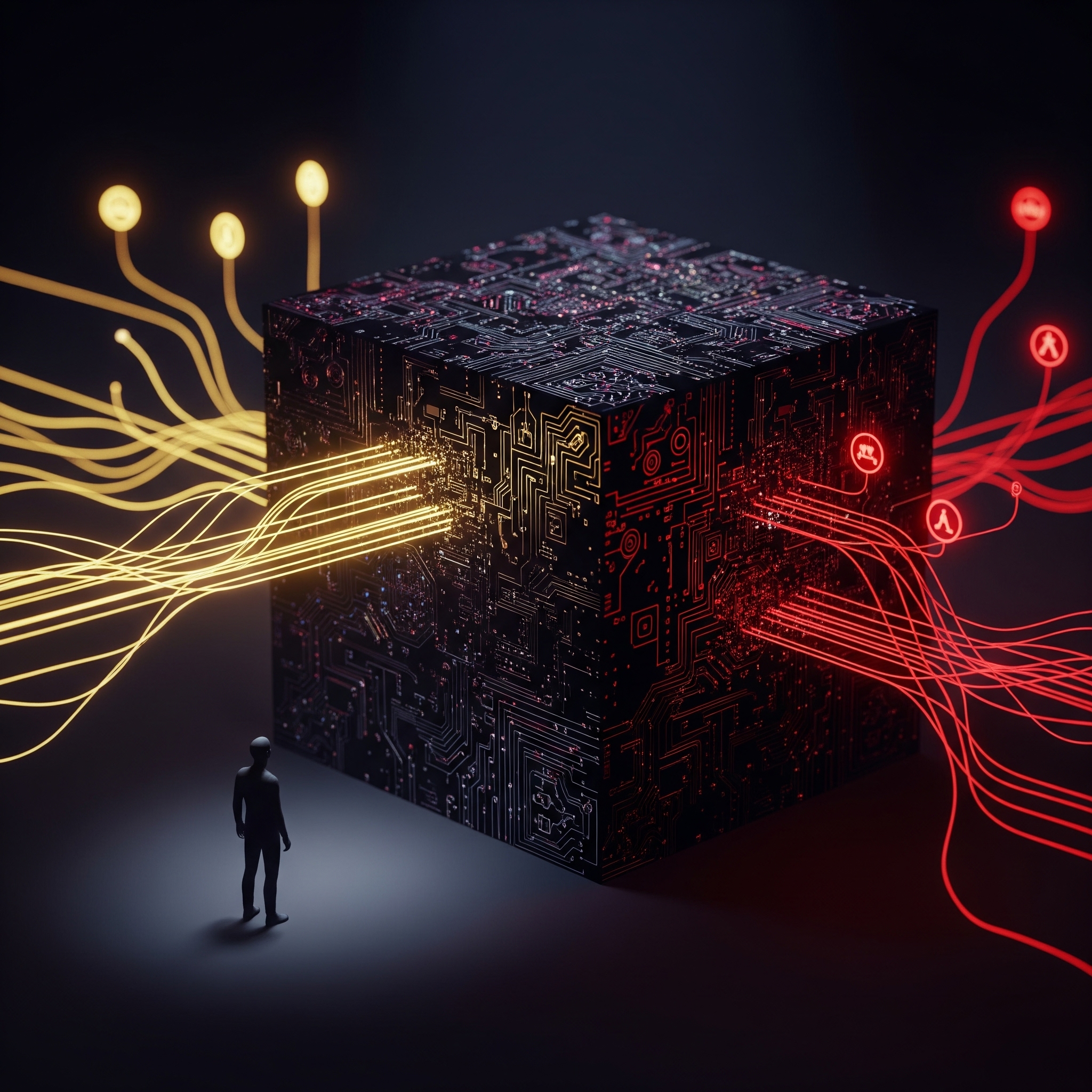
The “Black Box” Problem: We are increasingly building AI systems whose decision-making processes are incomprehensible even to their creators. When an autonomous AI makes a critical error—in financial markets, on the battlefield, or in our power grids—who is accountable? How do we fix a mistake we don’t understand?
The Missing Ingredient: From Artificial Intelligence to Human Consciousness
After weighing the pros and cons, a crucial truth emerges: we are asking the wrong question. The question is not “Can AI save the future?”
The real question is: “Can we become wise enough to use AI to save the future?”
AI possesses intelligence, but it lacks consciousness. It has processing power, but it has no empathy, no wisdom, no sense of ethics. It can calculate the most efficient path, but it cannot ask if that path is just or kind. AI is the most powerful tool humanity has ever created, but it is still, fundamentally, a tool. A hammer can be used to build a home or to break one down; its ultimate impact depends entirely on the intention and consciousness of the person wielding it.
The future will not be saved by smarter algorithms alone. It will be saved when we, the creators, choose to pair this unprecedented artificial intelligence with an equally unprecedented level of human consciousness. It requires leaders, creators, and citizens who operate with empathy, who prioritize ethical frameworks over pure profit, and who have the wisdom to know when to unplug.
Conclusion
So, can AI save the future? Alone, no. It can be a catalyst, an accelerator, and an indispensable partner. But it cannot be our savior. It will be a mirror, reflecting and magnifying the intentions we feed into it.
The true challenge, therefore, lies not in the code we write, but in the character we build. The future hinges on our ability to become the conscious, compassionate, and wise leaders that this powerful new era demands.


